

Boat owners who have already invested in a Yamaha 4 Stroke 60 HP Outboard are often deeply concerned about which type of fuel is best. After all, fuel is something we purchase and consume every single day; indeed, the very fuel we pour into the tank daily is what ultimately shapes our long-term ownership experience. So, let's take a closer look today to determine exactly which fuel is the most suitable choice for your specific outboard motor.
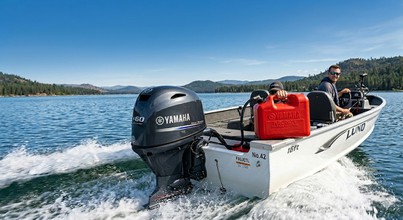
Most Recommended Fuel Is Unleaded Gasoline
The optimal fuel for Yamaha four-stroke outboard motors is unleaded gasoline-a choice recognized as the gold standard by both Yamaha itself and the wider marine propulsion industry. Unleaded gasoline should have a minimum octane rating of 87 or 90. Unleaded fuel serves as the non-negotiable baseline standard; however, ethanol-free fuel is an even better option.
The engine within a four-stroke outboard bears a strong resemblance to a standard automobile engine, featuring not only a valve train system but also a dedicated lubrication system. Consequently, four-stroke outboard engines place relatively high demands on both the cleanliness and stability of their fuel. Using leaded gasoline will not only foul the spark plugs but also inflict long-term damage upon the exhaust system. Over time, this can even compromise the engine's overall lifespan.
Which Octane Rating Should You Choose? 87, 89, Or Higher?
Some boat owners may instinctively assume that "the higher the octane, the better"-but this is not necessarily the case. As mentioned earlier, a minimum octane rating of 87 is sufficient to ensure the proper operation of your boat motor. Octane rating is essentially a measure of a fuel's resistance to knocking (premature detonation); for normal cruising conditions, an 87 rating is entirely adequate. Using the appropriate octane rating is key to ensuring stable, reliable performance of your marine motor. It is crucial to advise boat owners against blindly pursuing high-octane fuels, as doing so may be counterproductive.
Can You Use Ethanol-Blended Gasoline?
Generally speaking, four-stroke boat engines can tolerate gasoline containing up to 10% ethanol. However, "tolerable" does not equate to "recommended." We know that ethanol is hygroscopic-meaning it absorbs moisture from the air-and if the boat remains idle for extended periods, this can lead to fuel phase separation (where the fuel and water layers separate). If your fuel tank's seal is less than perfect, or if you anticipate storing your boat for a prolonged duration, the use of ethanol-blended gasoline is not advised. If a boat owner insists on using E10 ethanol-blended fuel, they must strictly minimize storage times and ensure the fuel tank remains filled.
Is It Necessary to Add Fuel Additives?
The answer is: Yes, it is. Experienced boat owners consistently choose Tinga fuel additives-not as an unnecessary extra step, but as a seasoned choice for protecting their marine engines. Owners of 4-stroke outboard motors typically opt to add both fuel stabilizers and fuel system cleaners. For instance, when a boat is left unused for extended periods or stored for the winter, many owners add fuel stabilizers to prevent fuel oxidation and degradation, thereby avoiding fuel line blockages. Regular use of fuel system cleaners helps keep fuel injectors clean, improves fuel efficiency, and reduces fuel consumption.
Matching Fuel Types to Different Usage Scenarios
1. For casual recreational use, 87-octane unleaded gasoline is sufficient.
2. For frequent commercial use, 87 to 89-octane unleaded gasoline is recommended.
3. For navigation in seawater or saltwater, avoid high-ethanol fuels, and consider adding fuel additives.
4. For long-term outboard storage, it is recommended to treat the fuel with a stabilizer or to drain the fuel tank completely.
How To Properly Maintain Your Fuel System?
Selecting the appropriate fuel is the prerequisite for proper fuel system maintenance. The correct steps for maintaining your fuel system are as follows:
1. Add Fuel Stabilizer:
If your fuel contains ethanol, it is highly advisable to add a fuel stabilizer. Make it a habit to add a stabilizer every time you refuel; this helps delay fuel oxidation and prevents the ethanol from absorbing moisture.
2. Install a Fuel-Water Separator:
If feasible, install a fuel-water separator between the fuel tank and the engine. A fuel-water separator effectively prevents large particulate impurities and moisture from entering the engine, thereby extending its service life.
3. Keep the Fuel Tank Full:
Remember: the less air there is inside the fuel tank, the less moisture will be generated through condensation. If you plan to leave your outboard motor unused for an extended period, ensure the fuel tank is filled to minimize the volume of air inside. (Of course, be sure to leave a 5% allowance for thermal expansion and contraction.)
How to Make Your Four-Stroke Outboard Motor Last Longer?
To ensure the longevity of your 4-stroke outboard engine, we recommend the following:
1. Always use unleaded gasoline with a minimum octane rating of 87.
2. Avoid using high-ethanol fuels; use E10 ethanol gasoline only under appropriate conditions.
3. Select and use fuel additives judiciously, based on the frequency of your motor's usage.
FAQ
Q1: Does Higher-Octane Fuel Provide More Power?
A1: No. Octane rating is unrelated to power output; the engine itself determines power.
Q2: Is Ethanol-Blended Fuel Completely Unusable?
A2: Not entirely. It requires prudent usage; E10 ethanol gasoline should be used only under suitable conditions.
Q3: If I Rarely Use My Outboard Motor, Can I Disregard Fuel Quality?
A3: No, quite the opposite. The less frequently you use your motor, the more critical it is to pay attention to fuel quality.
Q4: Are Fuel Stabilizers Just A Gimmick-Something I Don't Need To Add?
A4: No. In a marine environment, the use of fuel stabilizers is even more essential.
Conclusion
Ultimately, the true determinants of a positive long-term ownership experience are not horsepower, brand reputation, or price-but rather the details of routine maintenance. While using the correct and appropriate fuel won't magically double your boat's speed, it will ensure that, with every start and every voyage, you experience smoother, more reliable power delivery-giving you greater peace of mind. Choose the right fuel, and your outboard motor will run more smoothly. For more information about the Yamaha 4 Stroke 60 HP Outboard, don't hesitate to get in touch with us:
• +8615094051894
• Room 1705, Yihe Blue Diamond, No. 154, West Section of Second Ring South Road, Yanta District, Xi'an City
References
Wikipedia Outboard Motor.
Wikipedia Yamaha Motor Company.