

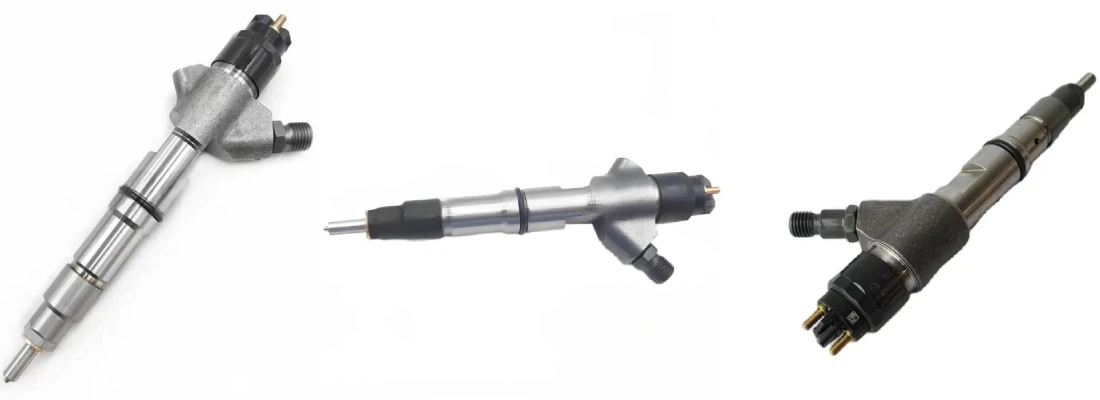
In modern diesel engine technology, Weichai injectors play a crucial role, especially under transient operating conditions. As a seasoned Weichai Injector supplier, I've witnessed firsthand the challenges and requirements that these high - precision components must meet. This blog will delve into the performance requirements of Weichai injectors during transient operations.
Understanding Transient Operating Conditions
Transient operating conditions in a diesel engine occur when there are rapid changes in engine load, speed, or both. These changes can happen during acceleration, deceleration, or when the engine suddenly encounters a heavy load. Unlike steady - state conditions where the engine operates at a relatively constant speed and load, transient conditions put additional stress on the engine components, including the injectors. For example, during a sudden acceleration, the engine needs to quickly increase its power output. This requires a rapid increase in fuel injection quantity and a precise control of the injection timing.
Injection Quantity Control
One of the primary performance requirements of a Weichai injector under transient conditions is accurate injection quantity control. In transient scenarios, the amount of fuel injected into the combustion chamber must be adjusted rapidly and precisely to match the changing engine requirements. If the injector cannot supply the correct amount of fuel, it can lead to various problems.
When accelerating, if the fuel injection quantity is too low, the engine will experience a lack of power, resulting in slow acceleration and poor drivability. On the other hand, if the fuel injection is excessive, it can cause incomplete combustion, leading to increased emissions of pollutants such as particulate matter (PM) and nitrogen oxides (NOx), as well as reduced fuel efficiency.
Our Weichai injectors are designed with advanced control algorithms and high - precision electromechanical components to ensure accurate injection quantity control. The electronic control unit (ECU) continuously monitors the engine's operating parameters such as intake air temperature, pressure, and engine speed, and then calculates the appropriate fuel injection quantity in real - time. The injector solenoid valve can respond quickly to the ECU's commands, opening and closing with high precision to deliver the exact amount of fuel needed.
Injection Timing Precision
In addition to injection quantity control, injection timing is also critical under transient conditions. The timing of fuel injection affects the combustion process and, consequently, engine performance, emissions, and efficiency.
During transient operations, the optimal injection timing can change significantly. For instance, when the engine is accelerating, the fuel needs to be injected earlier to allow for more complete combustion. This is because the increase in engine speed reduces the time available for the fuel - air mixture to burn. If the injection timing is too late, the combustion process may not be completed before the exhaust valve opens, resulting in wasted fuel and increased emissions.
Our Weichai injectors are engineered to adjust the injection timing rapidly and accurately. The ECU takes into account various factors such as engine speed, load, and intake air conditions to determine the optimal injection timing. The injector's internal mechanisms can then adjust the start of injection (SOI) and end of injection (EOI) precisely to ensure efficient combustion.
Spray Characteristics
The spray characteristics of the Weichai injector also have a significant impact on engine performance under transient conditions. A well - designed spray pattern can enhance the mixing of fuel and air, leading to more complete combustion.
Under transient operations, the spray pattern needs to remain stable and consistent. For example, during a sudden load change, the injector should be able to maintain a proper fuel distribution within the combustion chamber. An uneven spray pattern can cause local rich or lean regions in the mixture, resulting in incomplete combustion and increased emissions.
Our Weichai injectors feature advanced nozzle designs that optimize the spray characteristics. The nozzles are carefully engineered to produce a fine and uniform spray, which promotes better fuel - air mixing. The spray angle and droplet size are also precisely controlled to ensure efficient combustion under different transient conditions.
Response Time
The response time of the Weichai injector is another important performance requirement under transient conditions. A fast - responding injector can quickly adjust to the changing engine demands, ensuring smooth engine operation.
During transient events, such as a sudden acceleration or deceleration, the injector needs to start and stop the fuel injection promptly. A slow - responding injector may result in a delay in the power delivery, causing a lag in the engine's performance.
Our Weichai injectors are designed with high - speed solenoid valves and advanced control systems to minimize the response time. The solenoid valves can open and close in a matter of milliseconds, allowing for rapid changes in the fuel injection process.
Compatibility with Other Engine Components
Weichai injectors must also be compatible with other engine components under transient conditions. They work in conjunction with components such as the Sinotruk Water Pump, Truck Engine RPM Sensor, and Weichai Oil Pressure Sensor.
The water pump is responsible for cooling the engine, and proper engine temperature is essential for the correct operation of the injectors. If the engine overheats, it can affect the injector's performance and durability. The RPM sensor provides crucial information about the engine speed to the ECU, which is used to calculate the injection quantity and timing. The oil pressure sensor monitors the engine oil pressure, ensuring that the engine's lubrication system is working properly, which is also important for the injector's operation.
As a Weichai Injector supplier, we ensure that our injectors are fully compatible with these and other engine components. Our products undergo rigorous testing to ensure seamless integration with the entire engine system.
Conclusion
In conclusion, the performance requirements of a Weichai injector under transient operating conditions are complex and demanding. Accurate injection quantity control, precise injection timing, stable spray characteristics, fast response time, and compatibility with other engine components are all essential for optimal engine performance, emissions reduction, and fuel efficiency.
If you are looking for high - quality Weichai injectors that meet these stringent performance requirements, we are here to supply you. Our years of experience in the industry, combined with our commitment to innovation and quality control, make us a reliable partner for your injector needs. Contact us for procurement discussions, and let's work together to meet your engine's performance requirements.
References
- Heywood, J. B. (1988). Internal Combustion Engine Fundamentals. McGraw - Hill.
- Stone, R. (1999). Introduction to Internal Combustion Engines. Society of Automotive Engineers.
- Ramos, A. M., & Chronis, T. (2010). Diesel Engine Combustion and Emissions. Wiley - VCH.