

Outboard Motors 2 Stroke Yamaha are a popular choice for powering small workboats, fishing boats, and inflatable craft since they are easy to understand. A two-stroke outboard motor won't work the way it should if it's not fitted and set up correctly. How should a two-stroke outboard engine be put together and set up? Let's go through the whole process together today, from safely attaching the motor and setting up the fuel system to starting it up for the first time.
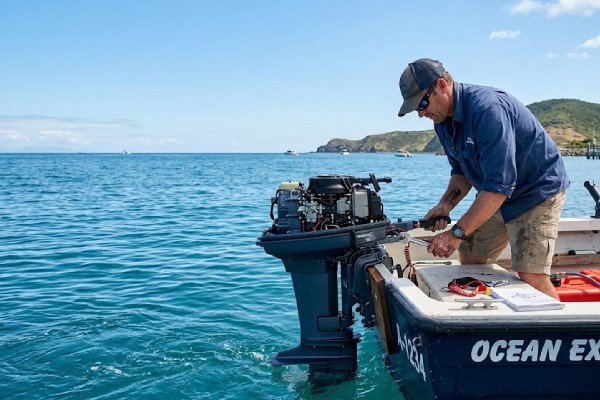
Why Proper Installation Matters For Outboard Motor 2 Stroke?
Two-stroke outboard motors are more sensitive to the ratio of fuel to oil than four-stroke outboards. They have a simpler mechanical structure and respond to the throttle more quickly. If you install a two-stroke boat motor correctly, it will start up smoothly, speed up quickly, use fuel efficiently and economically, and last longer.
Install And Set Up A 2 Stroke Outboard Motor
To install a two-stroke boat engine, you will need a wrench set, screwdrivers, an electric drill, a tape measure, and pliers. You will need a two-stroke outboard motor with the right amount of horsepower, mounting bolts and clamps, a fuel tank and fuel lines, engine oil, marine-grade lubricant, a safety lanyard, and other things. Here are the right steps for installing:
1. Check To See If The Hull Is Compatible:
Check to make sure that the height of the boat's transom is the same as the length of the engine's driveshaft before you install it. Also, be sure that the hull structure can hold the weight of the motor and that the outboard's horsepower output is safe for the boat to use. Most small boats come with short-shaft two-stroke outboards.
2. Attach The Outboard In A Safe Way:
Place the marine motor exactly in the middle of the transom. Tighten the bolts on the mounting clamps evenly for clamp-on installations, which are usually used for low-horsepower outboards. This will keep the motor in a vertical and level position. For bolt-through installations, which are usually used for high-horsepower outboards, first mark where the mounting holes will go, drill the pilot holes, apply marine-grade sealant, and then use stainless steel bolts to hold the outboard securely in place. Keep in mind that the outboard motor needs to be very carefully fastened; there should be no looseness or wobbling at all.
3. Set The Right Height For The Outboard Engine:
The height at which the outboard boat motor is mounted is very important to how well it works. The best place for the Anti-Ventilation Plate is to be level with the bottom of the boat hull; it shouldn't be too high or too low.
4. Getting The Fuel System Ready:
Most two-stroke outboard motors need a mix of fuel and oil. The usual ratio is 50:1. If you don't mix the right amount of oil into a two-stroke outboard, it will harm the engine right away and severely.
5. Linking Control Parts:
If you're using a remote control system, connect the shift cable and the throttle cable. Then check to see that everything works smoothly and without any problems. If you have a tiller handle control system, make sure the throttle grip can turn freely and check the steering to make sure it works smoothly.
6. Checking The System That Cools Things Down:
Make sure the water intake port is totally clear before you start. Put the outboard motor in water or use a flush adapter to get water. If you run the motor without water, it will overheat and break down in a matter of seconds.
7. How to Start:
Here are the steps for the first time you start it up:
① Open the vent valve on the fuel tank.
② Pump the priming bulb over and again until it gets hard and full of gas.
③ If you're starting from cold, engage the choke.
④ To start the engine, pull the starter rope or turn the key in the ignition.
⑤ Let the engine run for a while.
Check this list:
① The idle speed is steady and smooth.
② The tell-tale (water outlet) is letting out cooling water.
③ There are no strange sounds.
8. First Changes And Settings:
After starting, you should change the idle speed, make sure the throttle responds quickly, and make sure the gears move smoothly. Fine-tuning these settings makes the motor more reliable overall.
9. Time To Break In:
You need to follow the right break-in steps for a brand-new two-stroke outboard motor:
Don't run the engine at full power during the first several hours. Instead, change the engine RPMs every so often and utilize the right fuel-oil mixture.
Common Mistakes to Avoid
Things To Stay Away From:
❌ Mixing the gasoline and oil in the wrong way.
❌ Mounting it in the wrong place or at the wrong angle.
❌ Running the outboard without a water supply.
❌ Loose mounting clamps or bolts.
❌ Not following the break-in process.
Small Tips:
① Always mix new gasoline and oil together.
② Clean the carburetor every so often.
③ Check the spark plug every now and then.
④ Check the gasoline lines for any leaks.
⑤ After using the outboard motor, put it away correctly.
Conclusion
When you install and set up a two-stroke outboard motor, you need to pay close attention to the details, especially the fuel mixture ratio and how securely it is mounted. When installed and set up correctly, our two-stroke outboard motors work well, have a lot of power, and last a long time. A two-stroke outboard motor that is fitted correctly is not only architecturally simple and powerful, but it also runs very efficiently. Please get in touch with KLS Supplier for more information about the Outboard Motor 2 Stroke Yamaha:
• +8615094051894
• Room 1705, Yihe Blue Diamond, No. 154, West Section of Second Ring South Road, Yanta District, Xi'an City
FAQ
Q1: What happens if the ratio of gasoline to oil is wrong?
A1: If the fuel ratio is wrong, the outboard motor could overheat, get less lubrication, or perhaps break down completely.
Q2: Can you use a two-stroke outboard engine without adding oil to the fuel?
A2: No, you have to put oil into the fuel before you can use a two-stroke outboard motor.
Q3: How tight should the clamps that hold the mount be?
A3: They should be tight enough to keep the boat from moving, but not so tight that they harm the transom.
Q4: How can I tell if the marine engine is at the right height?
A4: The anti-ventilation plate should be level with the bottom of the boat's hull.
Q5: How often should you take care of a two-stroke boat engine?
A5: To make sure it will work well for a long time, it should be checked after each usage and maintained on a regular basis.
References
Wikipedia Outboard Motor