

Installing the steering system correctly is an important part of putting together a Two Stroke Outboard Motor. A steering system that is set up correctly not only makes it easier to control the boat, but it also makes it more responsive and improves the whole sailing experience. Let's learn how to properly set up an outboard motor steering system today.
What Is An Outboard Steering System?
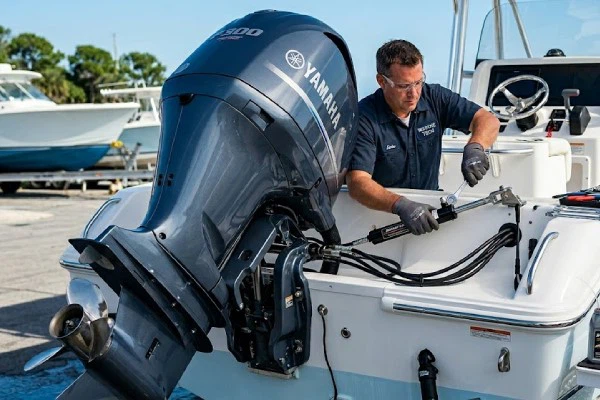
By rotating the outboard motor left and right, an outboard engine steering system controls the boat's course. Mechanical steering, hydraulic steering, and rudder steering are all types of steering systems. Cable steering, often called mechanical steering, is the cheapest and easiest to install. It works well on small and medium-sized boats. Hydraulic steering gives you more precise and smoother control, which makes it better for bigger or more powerful boats. Low-horsepower boat motors frequently have rudder steering, which has a manual handle that is directly connected to the boat engine.
Why Proper Installation Matters?
If the steering system isn't installed correctly, it can make steering stiff or slow, cause uneven turning radii, and make it exceedingly risky to lose control at high speeds. Installing the steering system correctly makes steering easier and more accurate, which makes driving safer.
Step By Step: Installing A Steering System
Before you can install the steering system, you will need the following tools and materials:
Tools: an electric drill with drill bits, a wrench and socket wrench set, a screwdriver, a measuring tape, a hole saw, and so on.
Materials include a steering kit, marine sealant, cable ties, mounting bolts and brackets, and more.
Here are the right steps to follow while putting in the mechanical steering system:
1. Planning the layout:
Before you start drilling, figure out where the steering wheel will go and arrange the cable path from the steering wheel to the outboard motor, making sure to avoid sharp curves and tight corners.
2. Installing the Steering Wheel Assembly:
First, use a hole saw to make holes in the instrument panel. Then, securely attach the steering wheel assembly and put on the steering wheel.
3. Steering Cable Layout:
Run the cable from the steering wheel to the stern along the intended path and fasten it down with cable ties.
4. Connecting the Cable to the Outboard Motor:
To do this, run the steering cable through the swashplate of the outboard motor, attach the steering linkage arm to the outboard motor, and use bolts and locknuts to hold it in place. This link sends the action of the steering wheel to the outboard motor.
5. Check the steering performance:
By turning the wheel all the way to the left and right and making sure it moves smoothly. Make sure there is no resistance or sticking, and that the steering range is complete.
Here are the right steps for putting in a hydraulic steering system:
① Put the steering pump on the dashboard.
② Put the hydraulic cylinder on the motor that is outboard.
③ Hook up the hydraulic hoses.
④ Put hydraulic fluid into the system.
⑤ Let air out of the system.
When built correctly, a hydraulic steering system makes steering smoother, more accurate, and less tiring.
Things To Stay Away From:
❌ Too much bending of the cable.
❌ Choosing the wrong length of cable.
❌ Bolts that are loose.
❌ Not enough oil.
❌ Not testing before using it.
Small Tips:
① Carefully measure and choose the right length of cable.
② Make sure the steering mechanism is well-oiled.
③ Check for wear or rust on a regular basis.
④ If you have a high-horsepower outboard engine, the easiest way to improve it is to add a hydraulic steering system.
⑤ Make sure that all of the connections are strong and safe.
Conclusion
The steering system links the boat owner to the water. If you take your time and do the installation well, you may have smooth, accurate control and a safe sailing experience. Please get in touch with us for additional information about Outboard Motor 2 Stroke Yamaha:
• +8615094051894
• Room 1705, Yihe Blue Diamond, No. 154, West Section of Second Ring South Road, Yanta District, Xi'an City
FAQ
Q1: Can I put in the steering system myself?
A1: Of course. People who have owned boats for a long time know how to install the steering system themselves and have the tools they need.
Q2: How do I know what length steering cable to get?
A2: You may find out how far the bridge is from the stern and then pick the right length for your boat.
Q3: When is it possible for me to switch to a hydraulic steering system?
A3: Most of the time, you need to switch to a hydraulic steering system if your outboard motor has more than 90 horsepower. Of course, the boat owner can also choose a hydraulic steering system if they want smoother steering.
Q4: Why does the steering feel so tight after installation?
A4: This might be because the cable was bent too tightly, there wasn't enough lubricant, or it wasn't lined up correctly, which would make the steering system excessively tight once it was installed.
Q5: How often should you check on the steering system?
A5: At least once every sailing season, which implies you need to check and lubricate it often. In bad weather, maintenance needs to be done more often.
References
Wikipedia Outboard Motor