

Anyone familiar with outboard motors has likely heard of Yamaha Outboard Motor. Yamaha offers both two-stroke outboard motors and 4-Stroke Outboard Motors. The advent of the four stroke outboard motor marked the beginning of a technological revolution in the outboard motor industry. As early as 1984, Yamaha launched its first 9.9 hp four-stroke outboard engine motor.
Yamaha initially introduced two-stroke outboard engines. These were extremely popular in the 1970s. They were simple in structure, lightweight, and powerful, making them highly sought after. However, two-stroke boat motors had their drawbacks, namely, they were less environmentally friendly. Therefore, Yamaha introduced the more environmentally friendly and energy-efficient four-stroke outboard boat motor.
Early four-stroke boat motors were primarily low-horsepower and medium-horsepower. High-horsepower four-stroke outboard motors appeared later. Fishing boat owners and those with family yachts generally opted for low-horsepower outboard motors. In the mid-1990s, Yamaha introduced 50hp and 100hp four-stroke boat motors.
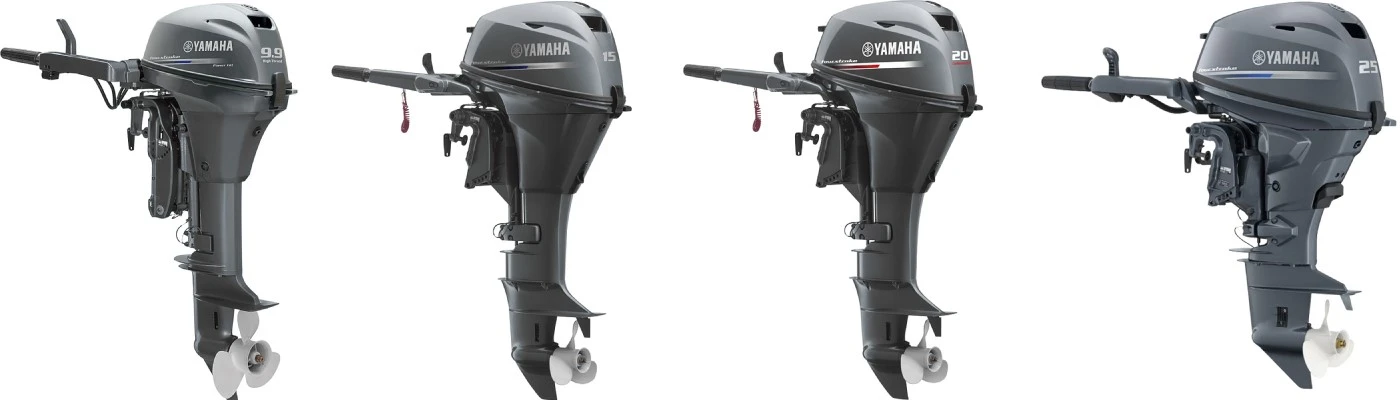
2000 was a crowning year; in that year, Yamaha launched a 225hp four-stroke outboard motor with a built-in V6 engine, boasting both lightweight construction and high fuel efficiency. Now, in 2026, Yamaha has been in the four-stroke boat engine field for 42 years, and the technology is highly mature.
Having discussed the development history of Yamaha's four-stroke outboard motors, let's talk about the differences between two-stroke and four-stroke boat motors. If 2 stroke boat motors represent power and simplicity, then 4 stroke boat motors represent efficiency and the future.
The advantages of 2 stroke outboard motors are: simple structure, easy maintenance, and strong power output. The disadvantages are high fuel consumption and high emissions. The advantages of 4 stroke outboard motors are: more complete combustion, lower emissions, quieter operation, better fuel economy, and greater durability.
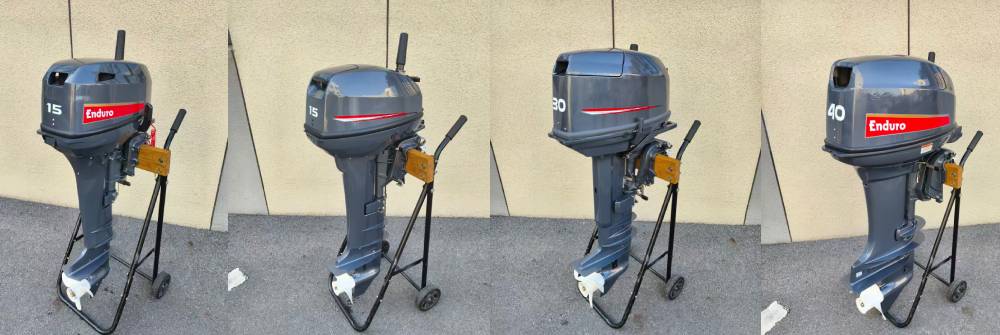
Today's boat owners are more focused on fuel economy, quieter and more comfortable operation, and have increased demands for long-distance sailing and stability. When choosing an outboard motor, if you need low horsepower and only need it for short periods, a two-stroke outboard motor still has its advantages; if you are using it for commercial purposes, or for long-distance cruising and fishing, a four-stroke outboard motor offers better value for money.
Four-stroke outboard motors are reliable, fuel-efficient, and produce no unpleasant exhaust fumes. They do not require mixing; add gasoline to the fuel tank and engine oil to the engine. The gasoline and engine oil are always kept separate. As an outboard motor supplier, KLS Company offers a full range of outboard motors, supplying both two-stroke and four-stroke models. We also provide OEM-quality parts to ensure your outboard motor remains in optimal factory condition.
Today, strolling along any dock, the rhythmic, deep hum of four-stroke and two-stroke outboard motors has become a standard feature of the sea. For more information about Yamaha Outboard Motors, don't hesitate to get in touch with us:
• +8615094051894
• inquiry@klsautoparts.com
• Room 1705, Yihe Blue Diamond, No. 154, West Section of Second Ring South Road, Yanta District, Xi'an City