

You put your Outboard Motor Engine in, and from the outside, everything appears perfect. But as soon as you touch the water, something seems odd. The boat might be going slower than you thought, it might not be able to attain a planing position, or the power might not feel as strong as it should. Don't worry; today we'll look at the most typical reasons for these performance problems after installation and how to fix them.
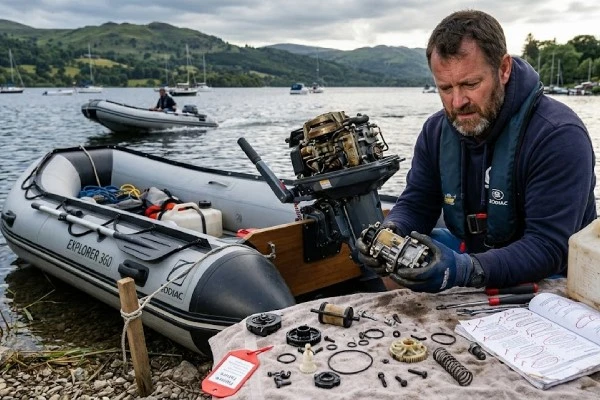
What "Poor Performance" Usually Looks Like?
Slow acceleration, trouble getting to a planing state, a top speed that is lower than planned, too much fuel use, engine RPMs that are either too high or too low, unstable handling, or too much vibration are all signs of poor performance. Below are the most prevalent problems:
1. Wrong Height For Outboard Motor Mounting:
One of the main reasons why outboards don't work well is because they are mounted too high. If the outboard is too high, the propeller may lose its grip on the water, which will make the engine rev too high and the thrust will drop. On the other hand, if the outboard engine is situated too low, it creates too much drag, which slows down the boat and makes it use more gasoline. The best place to attach a boat motor is such that the anti-ventilation plate is level with the bottom of the boat hull.
2. Choosing The Wrong Propeller:
Even if the outboard engine is working fine, a propeller that doesn't fit right can still make it not work well. Choosing the wrong pitch, diameter, or blades that are broken or very worn are all mistakes that can happen when choosing a propeller. If the engine RPMs are too high, it means that the propeller pitch is too low. If the RPMs are too low, it means that the pitch is too high. The answer is to choose a propeller that is the right size for your boat, can handle the weight, and has the right RPM range for the engine.
3. Driveshaft Length That Doesn't Match:
If the driveshaft length doesn't meet the height of the boat's transom, the propeller will be in the wrong place. If the propeller is too high (too shallow), it may cavitate or "slip." If it is too low (too deep), it adds drag. A driveshaft that is the wrong length can make a boat slower, use more gasoline, and handle worse. The answer is to get a boat engine with the right length driveshaft for your boat.
4. Setting The Wrong Hull Trim Angle:
The Trim Angle tells the boat how to run, or how it should be angled in relation to the water's surface. If the trim is excessively low, the bow will go down, which will slow down the boat and make it harder to steer. If the trim is too high, the bow will lift too much, which will make it harder for the propeller to grab the water. The right trim makes sure that the boat is always in a smooth planing state, that the ride is balanced, and that it goes as fast as possible.
5. Too Much Weight On The Ship:
Overloading a vessel means putting too much weight on it, which makes it work less well. Overloading makes it harder to get into a planning position, slows down acceleration, and uses more fuel. The answer is simple: don't put too much weight on the boat whenever you can.
6. Problems With The Steering Or Control System:
If the throttle or gear-shift mechanism isn't put together correctly, the marine engine might not be able to reach maximum throttle. This makes it slower to respond and harder to steer. In these situations, it is important to check the setting of the control wires to make sure they work smoothly and that the full throttle range is available.
7. Problems with the fuel system:
When there are difficulties with the fuel system, you need to look for fuel contamination, clogged fuel lines, air leaks, or the wrong type of gasoline.
8. The Break-in Time For New Marine Motors:
If you are using a brand-new marine motor, it may still be in its break-in period and not yet performing at its best when fully loaded. The internal parts of the motor are "seating" throughout the break-in period. The engine's RPM may be limited, and with time, performance will slowly get better.
9. Problems With Installation Alignment:
If the outboard motor is not installed correctly, it may cause the hull to yaw to one side, which will make performance imbalanced and increase drag. The answer is to make sure that the outboard's centerline is absolutely in line with the hull's centerline and that the mounting angle is correct during installation.
10. Cavitation and Ventilation:
When air gets into the propeller area, it causes ventilation, which reduces thrust. Cavitation happens when vapour bubbles form, which can hurt the propeller blades. The options are to examine the mounting height of the outboard motor and look for any evidence of damage on the propeller.
Quick Troubleshooting Checklist
① Height of the engine mount.
② The driveshaft length must be compatible.
③ The condition and pitch of the propeller.
④ Angle of trim on the hull.
⑤ Weight distribution of the hull.
⑥ Integrity of the fuel system.
⑦ Cables and connections for control.
⑧ Alignment of the installation.
Pro Tips for Optimal Performance
① Look at the suggested settings on the nameplate of the vessel.
② After making little changes, do test runs to make sure everything works as it should.
③ Make sure the propeller is in good shape.
④ Check the mounting points and fasteners from time to time.
⑤ Don't dismiss even small problems with performance.
Conclusion
Don't worry if performance doesn't meet your expectations after you install an outboard motor; in most cases, the problem isn't with the outboard itself. Instead, it is probably because of mistakes made during installation, parts that don't work together, or adjustments that weren't made correctly. These problems can be fixed with the right fine-tuning. The outboard engine will run smoothly and have a lot of power after all the settings are right and everything is in perfect alignment. Please get in touch with the KLS Supplier for more information about Outboard Engine 40HP Yamaha:
• +8615094051894
• Room 1705, Yihe Blue Diamond, No. 154, West Section of Second Ring South Road, Yanta District, Xi'an City
FAQ
Q1: Even though my boat has a strong outboard motor, why is it still slow?
A1: It might be because the propeller was not chosen correctly, the outboard engine was not mounted at the right height, or the hull was too heavy.
Q2: How can I determine if I picked the wrong propeller?
A2: Look at the engine's RPM. If the RPM is too high or too low, it means that the propeller pitch is not right.
Q3: Does the height of an outboard motor really have such a big effect on how well it works?
A3: Yes, the height at which the boat motor is mounted influences its speed, fuel efficiency, handling, and other things.
Q4: Do you need to change the boat's trim while you're out on the water?
A4: Yes, making the right trim changes is really important for getting the best performance out of the boat.
Q5: Is a technical problem always to blame for a boat's poor performance?
A5: Not always. In truth, bad performance is typically caused by how the boat is set up, how it was installed, or how it is configured, not by a problem with the boat engine itself.
References
Wikipedia Outboard Motor