

Choosing the appropriate propeller for your Outboard Motor 4 Stroke is vital. A misaligned propeller will impair acceleration, speed, and fuel consumption. Even with appropriate horsepower and proper installation, an improper propeller will hamper normal navigation. How do you choose the right propeller? This guide will break down the propeller choosing process step by step.
What Is The Function Of An Outboard Motor Propeller?
A propeller of an outboard motor turns kinetic energy into thrust, propelling the boat forward in the water. Think about it this way: the engine supplies the power, and the propeller regulates how that power is employed.
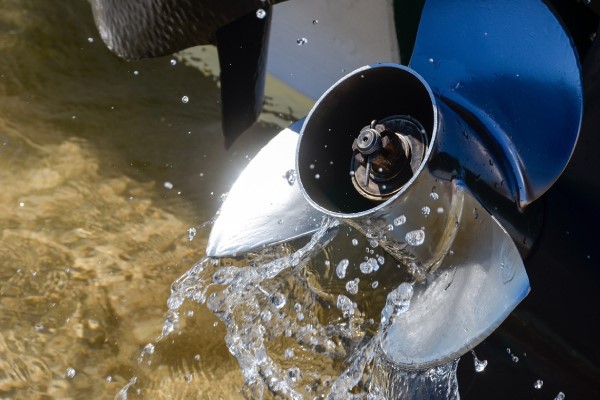
A Deeper Understanding of Outboard Motor Propellers
The three main characteristics that determine a propeller are diameter, pitch, and number of blades. Diameter is the distance of the circles generated by the rotating blades; there are large and small diameters. A big diameter has a larger water-pushing area and stronger grip, making it more suitable for heavy vessels. A tiny diameter has less drag and higher high-speed capability, and is typically employed in light speedboats. Pitch refers to the theoretical distance the propeller travels in one revolution under ideal conditions; there are low and high pitches. Low-pitch propellers offer stronger power and a more powerful start, but lesser speed, making them appropriate for low-speed fishing, net hauling, or large loads. High-pitch propellers offer a somewhat delayed start, higher speed, but poorer acceleration, making them suited for light-load racing circumstances. Most propellers have 3 or 4 blades. 3-bladed propellers give increased speed and efficiency; 4-bladed propellers have stronger water grip, better acceleration, and superior handling stability. If you prefer maximum speed, use a 3-bladed propeller; for heavy-duty fishing boats, choose a 4-bladed propeller.
| Features | Aluminum Alloy Propeller | Stainless Steel Propeller |
| Price | Economical and cost-effective | higher, typically 2-3 times the price of aluminum propellers |
| Durability | material is relatively soft and easily deformed upon impact with rocks | Extremely rigid and impact-resistant |
| Performance | blades are relatively thick and may deform slightly at high speeds | Thin and rigid blades result in higher efficiency and increased top speed |
| Maintenance |
Easy to repair and low replacement cost |
Expensive to maintain, but less prone to damage |
How to Choose the Right Propeller?
1: Understand your engine characteristics, confirm the speed range and standard propeller size, and use this as a selection benchmark.
2: Define your usage needs and determine the appropriate propeller type based on your actual application.
3: Check current performance by driving the boat at full throttle and watching the engine speed. If the speed is too high, the pitch is too low; if the speed is too low, the pitch is too high. The engine speed should be within the approved full throttle range.
4: Adjust the pitch accordingly. Based on experience, a 1-inch change in propeller pitch results in a change of around 150–200 RPM. To raise RPM, drop the pitch; to decrease RPM, increase the pitch.
5: Testing and Fine-tuning: A propeller that hasn't undergone actual testing is not a perfect propeller. Try propellers with varied pitches, observe boat speed, RPM, and fuel consumption, and make modifications gradually.
Propeller Suitable Scenarios:
1: For heavily loaded vessels or heavy transport, consider a low-pitch, large-diameter, 4-bladed propeller for higher thrust and improved maneuverability.
2: For pursuing maximum speed performance, choose a high-pitch, 3-bladed propeller.
3: For towing operations, consider a low-pitch propeller for quick starts and swift glide.
4: For difficult water conditions or offshore navigation, use a 4-bladed propeller for increased water grip.
If the wrong propeller is chosen, the following may occur:
1. Engine speed is excessively high, abnormally high, the propeller pitch may be too low;
2. Sluggish acceleration, slow climb, the propeller pitch may be too high;
3. Excessive fuel consumption, low engine efficiency, indicating a mismatch between propeller and propeller;
4. Cavitation or slippage happens, the propeller loses its grip on water, possibly caused by the propeller itself or installation height concerns;
Conclusion
Choosing a propeller entails learning to make trade-offs and strike a balance. Do you want the highest speed? The strongest thrust? Or the most fuel-efficient cruising? You must learn to optimize and balance speed, acceleration, fuel efficiency, and handling. Choosing the appropriate propeller may revolutionize your boat, making it faster, smoother, and more efficient. For more detail about Outboard Motor 4 Stroke 60HP, please contact KLS Supplier:
• +8615094051894
• Room 1705, Yihe Blue Diamond, No. 154, West Section of Second Ring South Road, Yanta District, Xi'an City
FAQ
Q1: Should I have a spare propeller?
A1: Strongly recommended! Collisions with obstructions on the water sometimes render propellers inoperable. Having a backup propeller in case of emergency can save the embarrassment of rowing back to shore in the middle of the lake.
Q2: What is cavitation, and will it damage my propeller?
A2: Yes. Cavitation is induced by the bursting of air bubbles due to low pressure on the blade surface. If you see pitting-like patches on the blade edges, it suggests the improper propeller was picked, or the propeller's installation height is inappropriate.
Q3: Will replacing the propeller save fuel?
A3: Yes. Using a WOT test to ensure the engine works within its optimal RPM range not only boosts speed but also optimizes fuel efficiency. A badly matched propeller is like driving at high speed in low gear - incredibly fuel-inefficient.
Q4: Does the saltwater or freshwater environment effect propeller selection?
A4: It depends on the substance. Saltwater is highly corrosive; stainless steel propellers are more corrosion-resistant, otherwise you may need to routinely inspect the sacrificial anode of aluminum propellers for damage.
Q5: Can I directly increase the payload by increasing the number of blades?
A5: A 4-bladed propeller does offer stronger lift and low-speed thrust, but normally compromises a little amount of top speed. If your boat is frequently fully laden with family or equipment, switching to a 4-bladed propeller is a sensible choice.
References
Wikipedia Outboard Motor